
There's a hell of a lot to be said about a bike that gets you up at 3 a.m. for just one more go. While the rest of London slept, I found myself out on the CB750 Hornet again. Couldn't help it. I knew the nice man from Honda would soon be on his way to take it from me, pootling along in his little lorry of injustice. So I wasn't going down without a fight. With the gleaming eyes of the barely caffeinated and the brain power of a boiled potato, I worked my way round the City of London in a procession of almost debonair absurdity.
I lunged down verboten Barbican service roads. I saw food deliveries no man should ever witness. I trundled into places I shouldn't have, got funny looks from night porters, and zipped out of them at exactly the speed limit. It was cold, my backside was numb, and by the end of it all I was sweatier than a double cheese and bacon at Ryka's. But it felt so right. The night foxes feared me. Smithfield workers wanted to be me. I was truly having The Greatest Of Times.
Then dawn broke. I swung off the Hornet, camera unslung, and reality hit: this thing is fiendishly difficult to photograph. I don't quite know why, honestly. In real life, it hangs together in a compelling way - as if all the design elements, the engine, the frame, the headlight cluster, are suspended in motion at just the right moment. It's a coiled spring of a bike, with a longer wheelbase and a more 'supple' look to it than you expect.
But your eye doesn't know where to rest. It's a perpetual motion trick played on you by the design team. Perhaps it's a natural instinct to look from the little dipped mandibles of the headlight back towards the thorax of the tank, inspecting the flared rear end for a sting in the tail. Charming, tense and lively - but in the hands of a photographer as diabolical as yours truly, a real challenge. It pains me to say it, but I don't think this one is going on any bedroom walls.
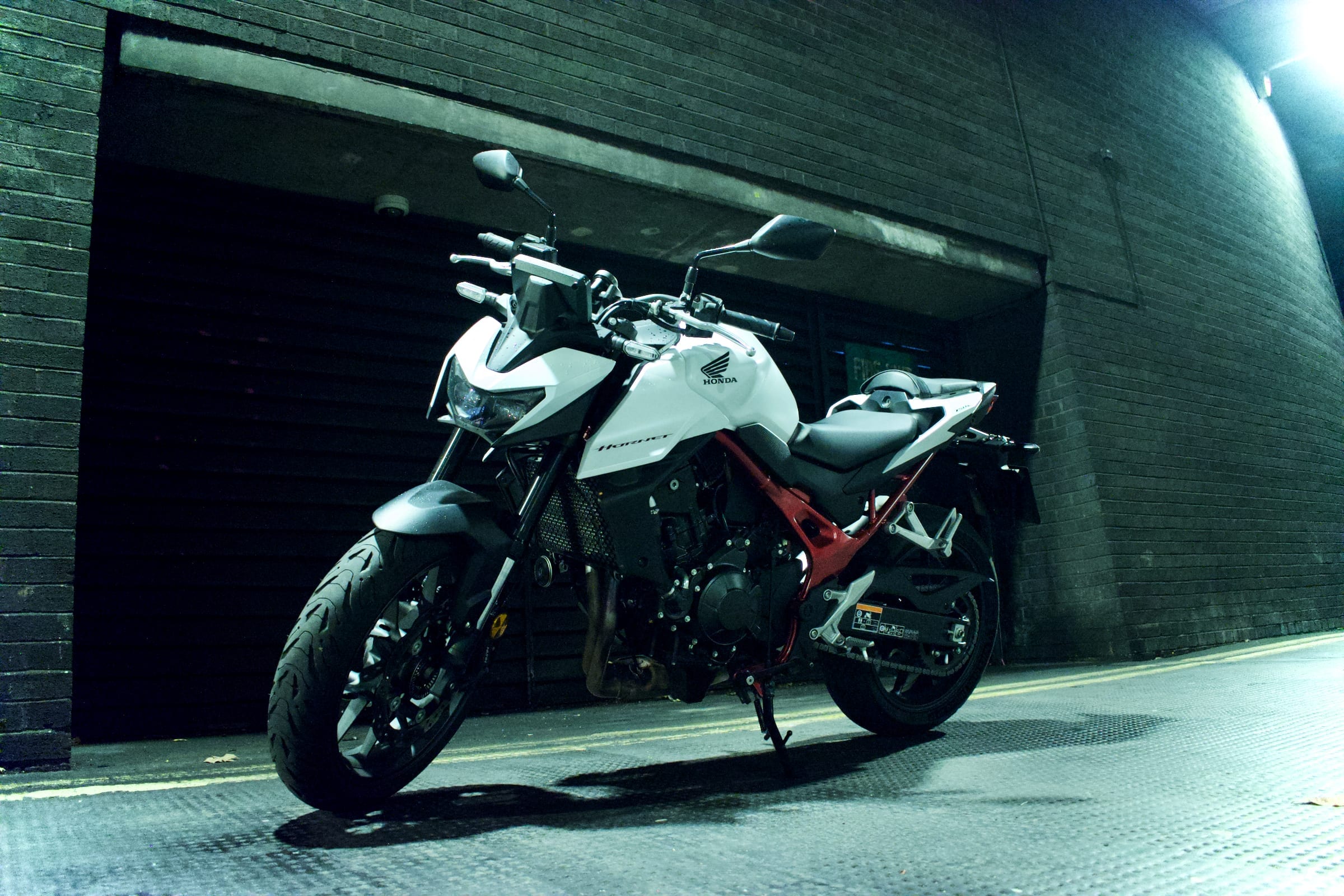
But why should it? It's not a machine for lusting after like some unobtainable superbike. The design brief for the CB750 Hornet could not have been clearer. Take the classic Hornet formula - fast, agile, fun, affordable - and make it happen again for a new audience, who were but a gleam in the milkman's eye when the original four-cylinder CB600F Hornet was buzzing roads across Europe in the early 2000s. This 190kg bike, with an impressively light steel diamond frame, delivers on that promise. It's incredibly easy to ride, with a seating position that will accommodate everything from ramrod-straight commuter to full sports-tuck. For taller riders like me - mostly leg - you never feel that there isn't room for your limbs.
The steering is quick, almost point-and-shoot. It takes you by surprise initially, but once you are up to speed, everything makes sense. The way the rake is set means that the bike is generously nimble even at higher speeds. The narrow wheels and tyres (you'll do a double take) add to the effect. You could turn this thing on the head of a pin if it was a motorcycle for ants.
Thankfully, bug-gering off at speed in a straight line is also a Hornet speciality. The engine here is the same 270-degree crank 755cc unit used in the XL 750 Transalp, albeit with 20 fewer kilos to haul. We were great fans of that power unit when we last reviewed it, and on the Hornet it still has a lovely urgency to it, a deep, resonant tone, and predictable power delivery. Compared to the venerable four-banger smoothie CB650R, this parallel twin unit has a touch less power, but a touch more torque. Cruising at speed never feels strained; popping predictable, controllable wheelies is hardly difficult. Or so we hear. Rumours abound, apparently.
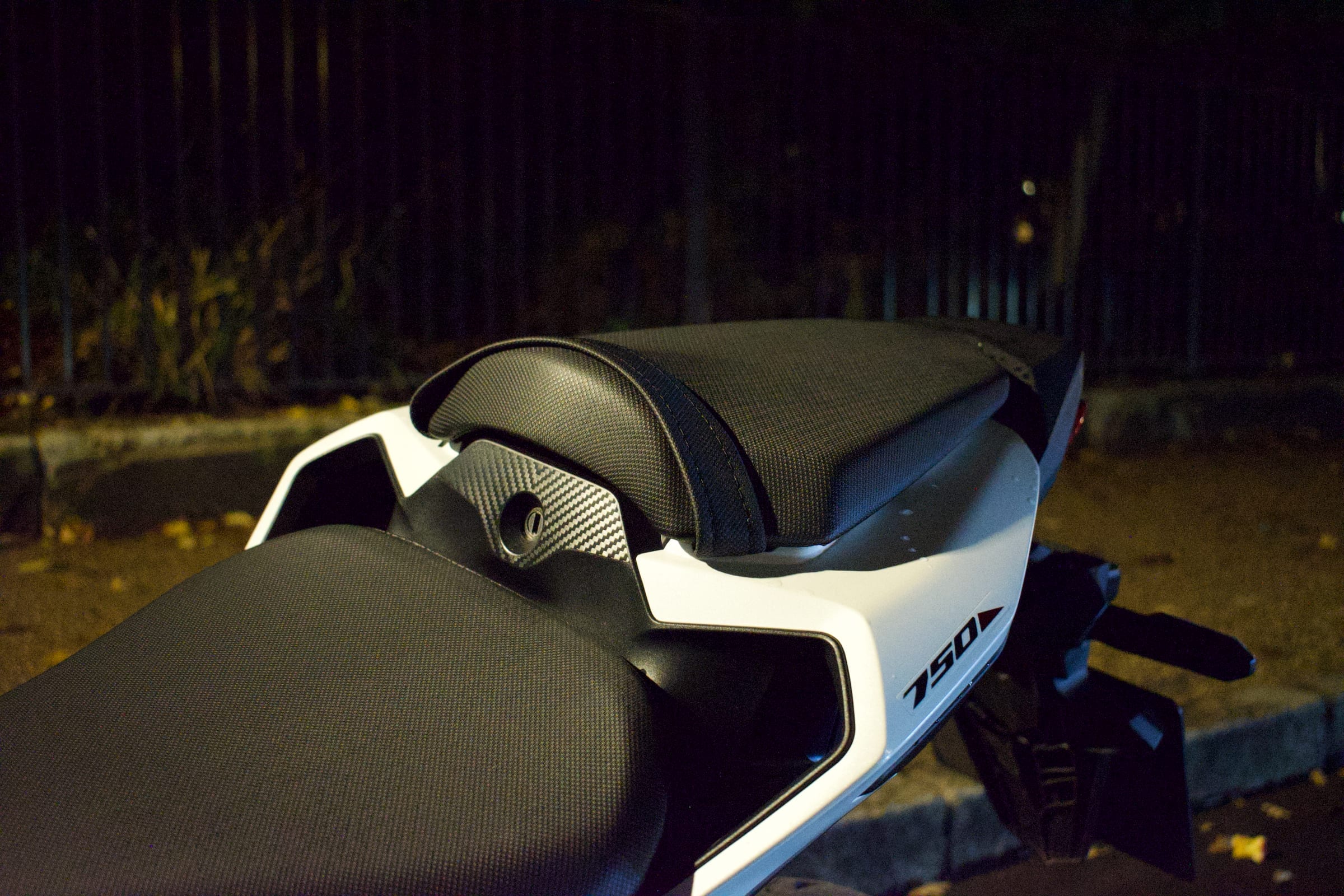
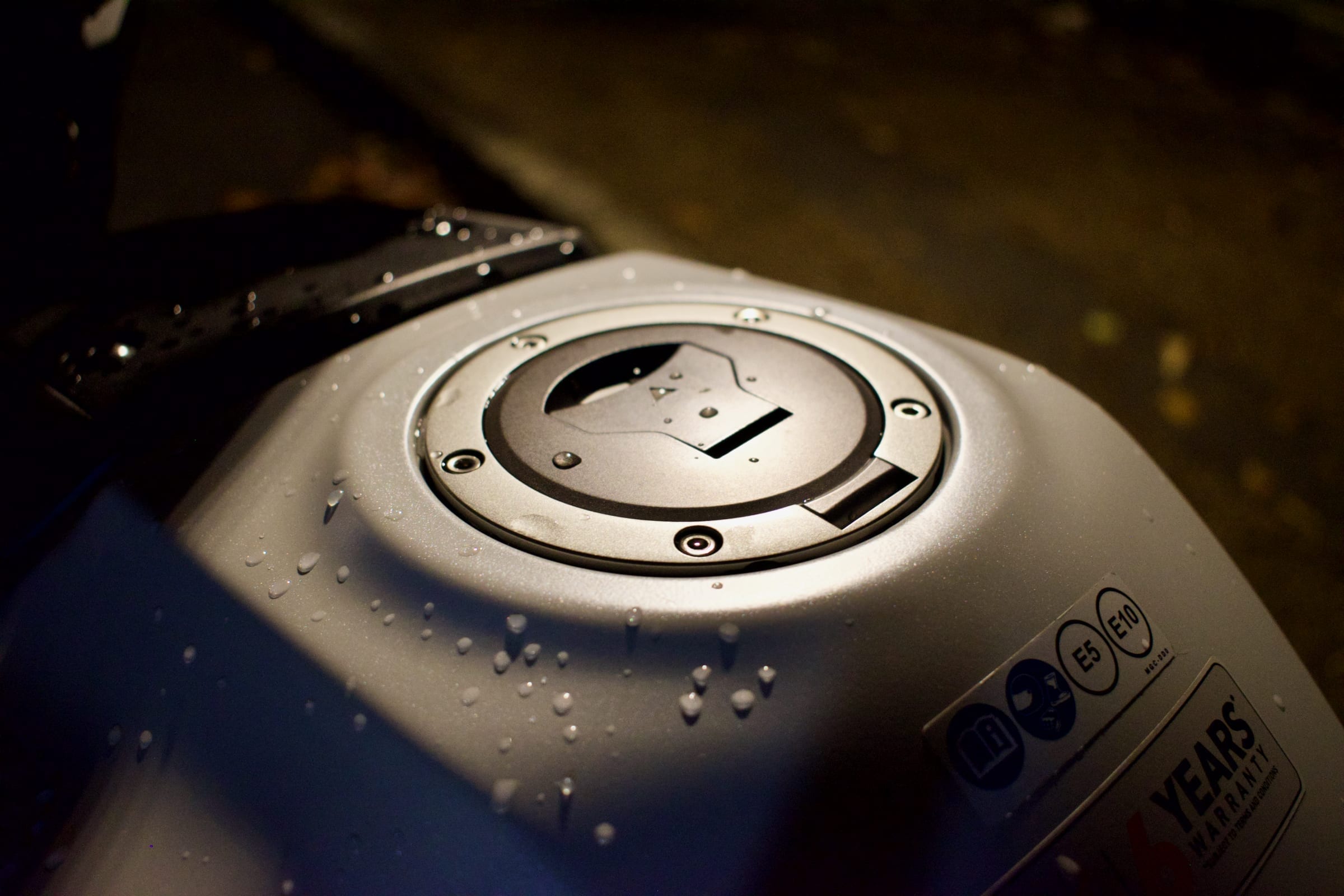
For all the levity, however, you would be foolish to underestimate this engine. It carries significant heft when you open the throttle, of a kind that never feels lacking on British roads. The Hornet is easily a very fast motorcycle. With its light steering, and ability to pop from turn to turn, it's a serious tool in the hands of a skilled rider, yet always tractable enough for beginners.
As was intended, the Hornet is good at a great many things. Slicing through traffic, mucking about in town, A- and B-road cruising, and ripping away from the lights are all very much in its wheelhouse. It has a clear, colourful and responsive TFT screen and rider modes to suit every gist and wrist. I ended up liking how oddly inconspicuous the bike was in town, even with my satin red frame and snow-white tank. The same characteristics that make it hard to photograph seemed to help it blend into the urban surroundings. Maybe I'm biased, but I'm sure it wasn't just a trick of the light. It didn't feel like I was being eyed up at a stop or attracting the sort of attention a 750cc motorcycle doesn't want, which in London is a blessing.
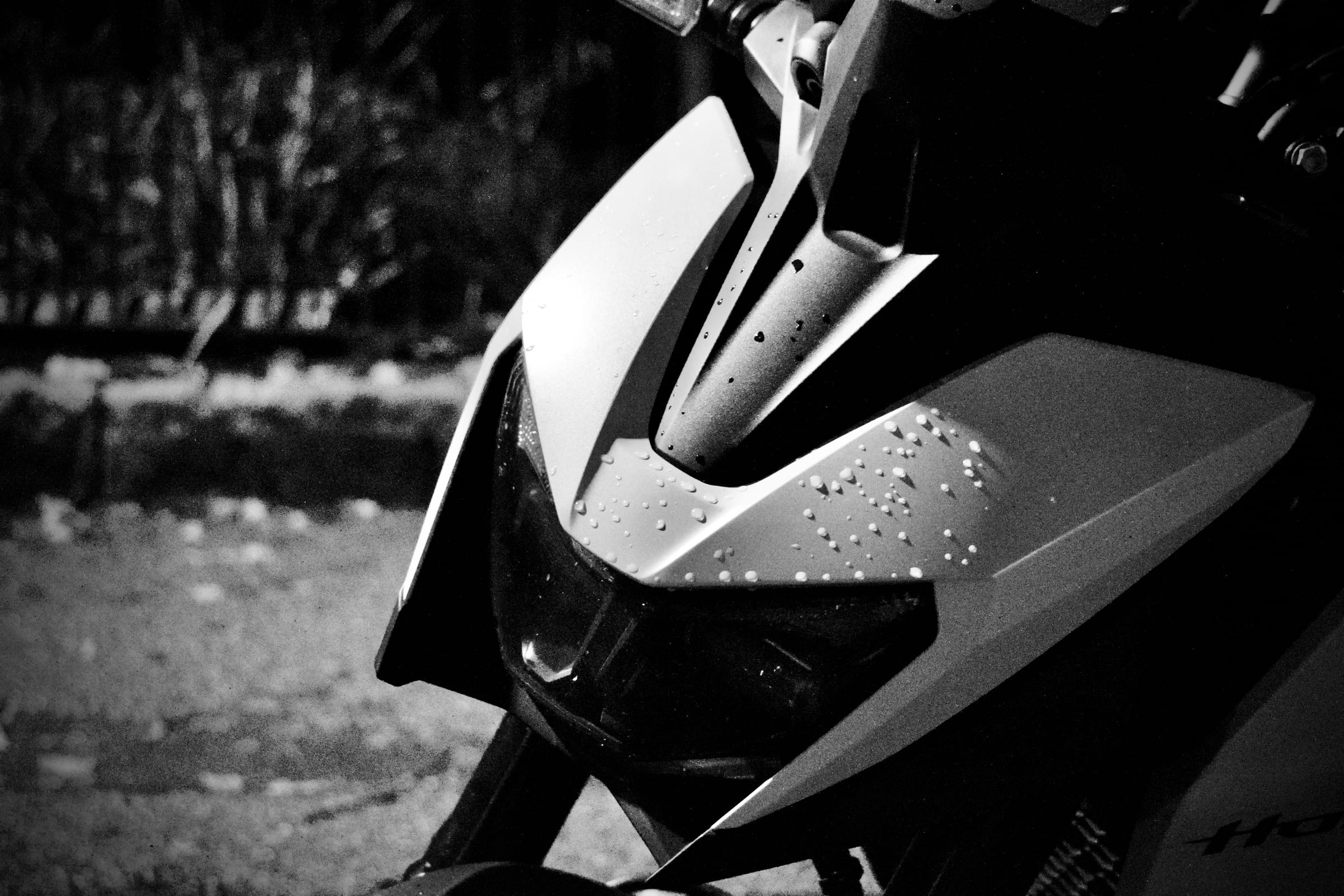
Another useful practicality was how easily the cast wheels take security equipment such as the Litelok X1/X3, Oxford Boss disc lock, and similar devices. This is not always the case with do-it-all consumer motorcycles thanks to 'gappy' brake discs and crowded swingarm designs; it's the sort of thing you only notice at exactly the wrong time - in the rain, at night, in your pool sliders, etc. This may be a design point we're sticklers for, given our testing of multiple motorcycles, but this sort of manufacturer thoughtfulness is appreciated.
Yeah. Appreciation. That's really what you feel when you jump off the Hornet. It's a slightly quirky looking machine which makes having fun absurdly easy - a middleweight which, in classic Honda fashion, is laser-focused on the important bits: engine, handling, ease of use. You won't need convincing to twist the throttle and muck about just a little bit longer. If it could speak, it would tell you to take the long route home. Make some excuses. Get up at 3 a.m. for the hell of it.
Oh look, a tunnel. Bzzzzz...